


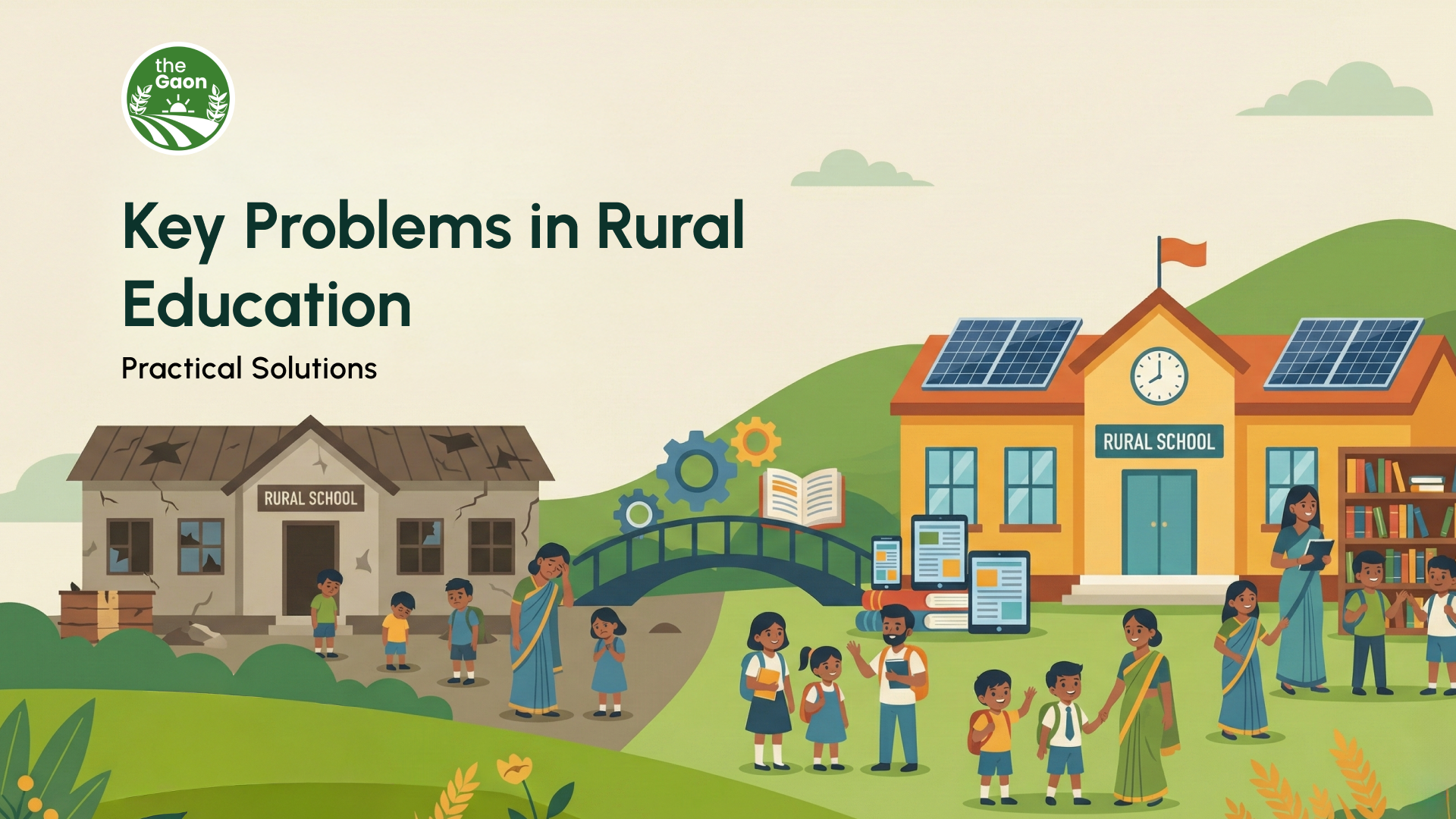
Key Problems in Rural Education: Practical Solutions
Have you ever thought about how schools look like in villages? A child`s development starts from the school.
For many children, school is the first step toward a better life. But in rural areas, learning is difficult. Some children walk long distances every day just to reach school. Many study in classrooms with broken walls, no benches, or shared books that are old and torn.
In cities, students use computers, smart boards, and online classes. In villages, many children still struggle to get basic learning tools. This gap affects their growth and future. Education is a basic right of every child, whether they live in a city or a village.
What Is Rural Education?
Rural education means schooling in villages and small towns. It`s aim is to help children learn how to read, write, think, and build basic skills. Rural schools also help children understand life, work, and values.
Many rural schools face daily problems. These include weak buildings, fewer teachers, lack of books, and poor learning support. These problems make it harder for children to stay in school and learn well.
Strong rural education helps children gain skills, support their families, and improve village life. It also helps reduce the gap between rural and urban areas.
Key Problems in Rural Education
Rural students face many challenges that slow down learning and growth.
1. Poor School Facilities
Many schools do not have clean toilets, safe classrooms, drinking water, or libraries. Some children sit on the floor or study in unsafe spaces. This affects health and focus.
2. Shortage of Teachers
There are not enough trained teachers in rural schools. Low pay, long travel, and poor living conditions make it hard to keep teachers in villages.
3. Poverty and Family Pressure
Many children help their families with farm work, house work, or small jobs. Some miss school due to seasonal work or migration.
4. Language Gaps
Lessons are often not taught in the child’s local language. This makes learning confusing and reduces interest in class.
5. Old Lesson Plans
Many schools follow lessons that do not match real life or job needs. Children miss chances to learn useful skills.
6. Lack of Learning Tools
Books, science tools, sports items, and libraries are often missing due to low funding.
7. Fewer Girls in School
In many villages, girls leave school early due to house work, early marriage, or old beliefs.
8. Limited Digital Access
Many rural students do not have computers, tablets, or internet access. This keeps them behind others.
9. Low Attendance
Long travel, weak school conditions, and family duties cause children to miss school often.
10. Weak Technical Skills
Without tools or training, students struggle to learn basic computer and technical skills.
Simple Ways to Improve Rural Education
Rural education can improve with steady effort and support.
1. Better School Buildings
Schools need safe classrooms, clean water, toilets, and basic furniture. A good space helps children feel safe and ready to learn.
2. Active Learning
Classrooms should include group work, simple projects, and hands-on activities. This helps children understand better and stay interested.
3. Teacher Support
Teachers need fair pay, training, and safe housing. When teachers feel supported, they teach better and stay longer.
4. Basic Digital Tools
Tablets, offline videos, and simple computer access can help students learn more, even without strong internet.
5. Parent and Community Support
When parents take part in school life, children attend more and learn better. Community support helps schools grow stronger.
Role of Government
Government programs like Sarva Shiksha Abhiyan (SSA) and RMSA(Rasthriya Madhyamik Shiksha Abhiyan) work to improve access and quality in rural schools. These programs help with buildings, teachers, and student support.
What the Future Can Look Like
Rural education can grow in many ways:
- Mixing classroom learning with simple online support
- Teaching in local languages
- Skill-based learning like farming, crafts, and small business work
- Early guidance for studies, careers, and mental health
Good education helps children build better future and strengthens the whole village.
Conclusion
theGaon believes change starts in villages. When people know the problems, they can fix them. theGaon shares real stories from schools, children, and families in rural areas. It helps to reach the useful information to people. When villages are heard and informed, children get a fair chance to learn and move ahead.
About theGaon
TheGaon is a Platform where rurals can find out information very easily whether it will be agriculture related, health related, government schemes related or education, etc. It is a goto platform for each kind of information which can fill the gap between rural and urbans.
The Gaon App is a mission-driven platform built to empower people from remote villages to bustling metros. We bring education, employment, health, finance, social security, and government awareness under one creative, interactive umbrella. Our goal is to make learning relatable, jobs reachable, and digital India meaningful for every Indian with or without a smartphone.
Join The Movement
For Individuals
Ready to learn something new or explore real India? Download the app today and start your journey.
 Download
For NGOs & Startups
Let’s collaborate to make education and awareness reach every corner of India. Partner with us for grassroots impact.
For Brands & Sponsors
Support the platform that’s reshaping how Bharat learns and grows. Connect with us for CSR collaborations.