


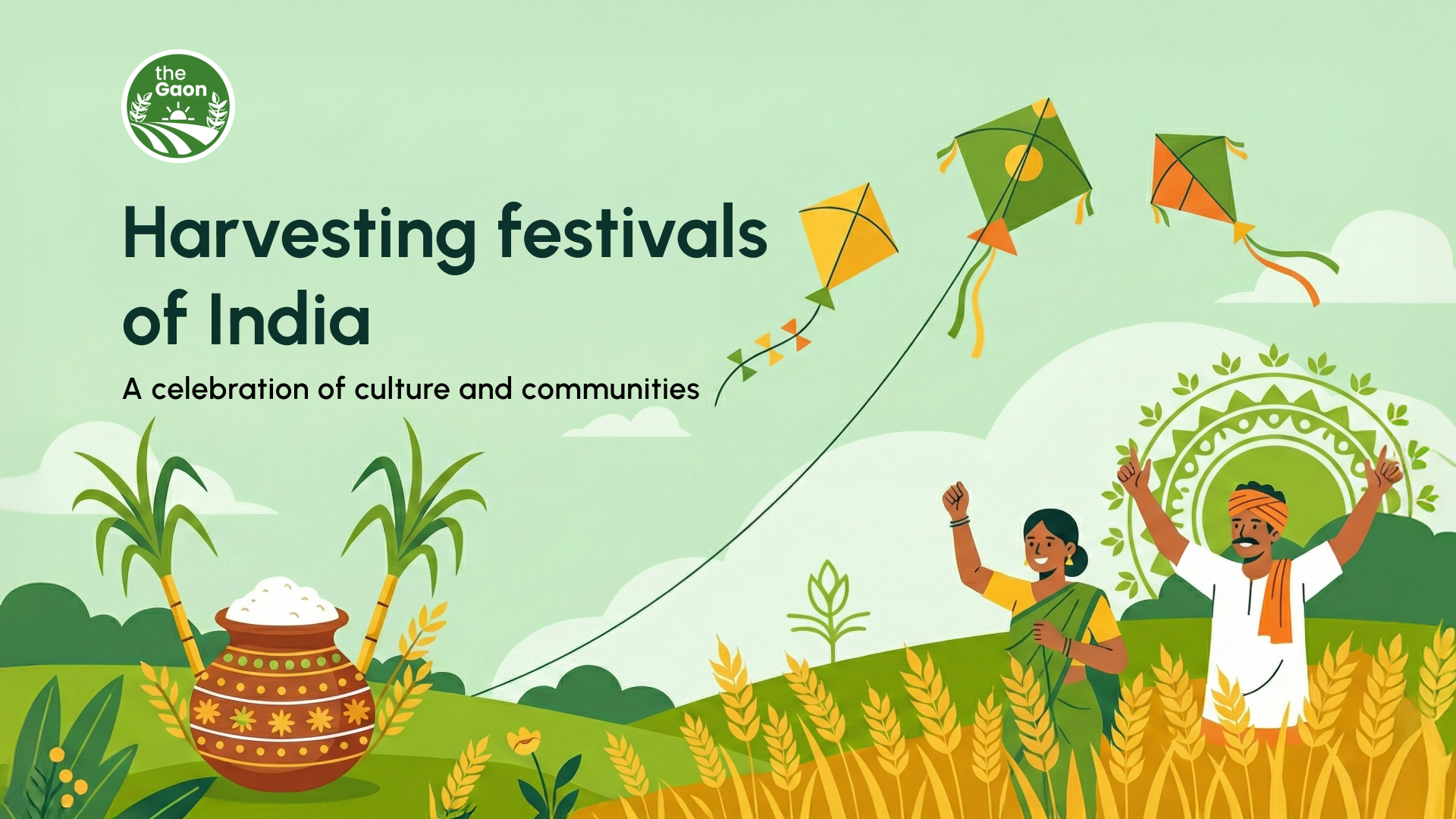
Harvest Festivals of India: A Celebration of Culture and Communities
India is truly a land of festivals, and the harvest season brings with it some of the most vibrant and joyful celebrations across the country. Every state marks this period in its own unique way, with harvest festivals deeply rooted in the agricultural traditions of rural life. From the golden wheat fields of Punjab during Baisakhi to the lush paddy fields of Tamil Nadu during Pongal, these celebrations beautifully reflect the strong connection between farmers and the land they depend on.
An Introduction to Harvest Festivals in India
India’s rich agricultural heritage and cultural diversity are reflected in its wide range of harvest festivals. Celebrated across different regions, these festivals are marked by colorful rituals, traditional foods, music, and community gatherings. Most harvest festivals take place at the end of the cropping season, honoring the hard work of farmers and expressing gratitude for nature’s abundance. They highlight the close relationship between humans and nature in India’s agrarian society.
Why Are Harvest Festivals So Important in India?
Harvest festivals hold deep social, cultural, and traditional significance in India.
They provide farmers with an opportunity to express gratitude for a successful harvest and thank nature for food and livelihood. These celebrations also mark the completion of the agricultural cycle, bringing families and communities together and strengthening social bonds. Rooted in age-old beliefs and customs, harvest festivals continue to play an important role in the daily lives and traditions of Indian farmers.
Here are some Important harvesting festivals of India :
1. Lohri
Lohri is a popular winter folk festival celebrated mainly in Punjab, Haryana, Himachal Pradesh, and Jammu. Observed on 13th or 14th January, it marks the end of winter and the harvesting of rabi crops like wheat and barley. People gather around bonfires, offer popcorn, gajjak, and rewri to the fire, and pray to the Sun God and Fire God for prosperity. The warmth of the bonfire, music, and community celebrations make Lohri a joyful occasion.
2. Makar Sankranti / Pongal
Makar Sankranti is one of India’s oldest harvest festivals, celebrated on 14th January each year. It marks the Sun’s transition into Capricorn, signaling longer days and the end of winter. The festival is known by different names across India—Uttarayan in Gujarat, Maghi in Punjab, and Pongal in Tamil Nadu. Pongal is a thanksgiving festival dedicated to the Sun, nature, and farm animals. Kite flying, community gatherings, and sweets made from sesame and jaggery are central to the celebrations.
3. Baisakhi
Celebrated in mid-April, Baisakhi marks the harvest of rabi crops and the Punjabi New Year. It holds special significance for the Sikh community. People visit gurdwaras, enjoy traditional foods like sarson ka saag and makki ki roti, and take part in energetic Bhangra and Giddha dances. The festival symbolizes joy, prosperity, and new beginnings.
4. Gudi Padwa
Gudi Padwa is celebrated as the New Year in Maharashtra and parts of Karnataka, usually in March or April. It marks the beginning of the agricultural season and the sowing of crops like wheat and sugarcane. A decorated Gudi made with neem and mango leaves is displayed outside homes as a symbol of prosperity. In Karnataka, the festival is known as Ugadi. Traditional dishes like puran poli and shrikhand add flavor to the celebrations.
5. Bhogali Bihu
Also known as Magh Bihu, Bhogali Bihu celebrates the end of the harvest season in Assam. Observed in January or February, the festival is marked by bonfires known as mejis, community feasts, and traditional Bihu dances. Rice, fish, meat, and local delicacies are prepared and shared, making it a celebration of abundance and togetherness.
6. Basant Panchami
Basant Panchami marks the arrival of spring and is celebrated in January or February across northern and eastern India. The festival is associated with the yellow color of blooming mustard fields. People wear yellow clothes, worship Goddess Saraswati, and celebrate in region-specific ways. In Punjab, community langars are organized, while other regions observe prayers and cultural programs.
7. Onam
Onam is Kerala’s most important harvest festival, celebrated in August or September. It commemorates the legendary King Mahabali and Kerala’s golden age of prosperity. Homes are decorated with floral rangolis called pookalams, and grand feasts known as Onam Sadhya are served on banana leaves. Traditional dances, boat races, and cultural performances enhance the festive atmosphere.
8. Wangala
Wangala is a harvest festival celebrated by the Garo tribes of Meghalaya and Assam. Dedicated to the goddess Saljong, it marks the end of the agricultural year. Known as the “Drum Festival,” Wangala features energetic performances with drums, flutes, and gongs, creating a vibrant and musical celebration of gratitude and harvest.
9. Nabanna
Nabanna is a traditional harvest festival of West Bengal, celebrated after the first rice harvest. Newly harvested rice is offered to deities and shared among families. Dishes like payesh (rice kheer) made from fresh rice are a major highlight, symbolizing prosperity, renewal, and gratitude.
10. Ladakh Festival
The Ladakh Festival is celebrated in September to showcase the region’s rich cultural heritage. Held in Leh, Zanskar, and Kargil, the festival features traditional dances, music, archery competitions, and local handicrafts. Decorated monasteries and cultural performances reflect Ladakh’s deep-rooted traditions and agricultural lifestyle.
Conclusion
Harvest festivals reflect the heart of India’s village life, where farming, culture, and community come together. These celebrations honour farmers, the land, and the traditions passed down through generations. At theGaon, we believe such festivals tell the true story of rural India-rooted in nature, unity, and gratitude. Preserving and celebrating these traditions helps keep India’s village heritage alive.
About theGaon
theGaon is a Platform where rurals can findout information very easily whether it will be agriculture related, health related, government schemes related or education, etc. It is goto platform for each kind of information which can fulfil the gap of rural and urbans.
the Gaon App is a mission-driven platform built to empower people from remote villages to bustling metros. We bring education, employment, health, finance, social security, and government awareness under one creative, interactive umbrella. Our goal is to make learning relatable, jobs reachable, and digital India meaningful for every Indian — with or without a smartphone.
Join The Movement
For Individuals
Ready to learn something new or explore real India? Download the app today and start your journey.
 Download
For NGOs & Startups
Let’s collaborate to make education and awareness reach every corner of India. Partner with us for grassroots impact.
For Brands & Sponsors
Support the platform that’s reshaping how Bharat learns and grows. Connect with us for CSR collaborations.